
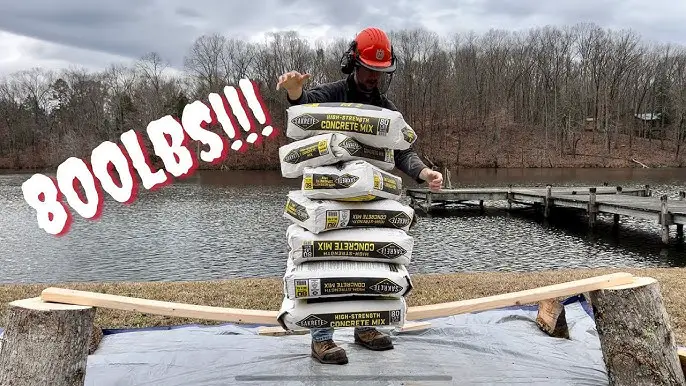
How much weight can a 2×4 hold?
Table of Contents
A 2×4 can hold anywhere from under 100 lb to several thousand pounds, depending on how it’s used. The biggest factors are span, orientation, wood species/grade, moisture, knots, fasteners, and whether the load is temporary or structural.
Quick answer
| 2×4 use case | Rough capacity |
|---|---|
| Vertical stud/post, short height | Often 1,000+ lb, sometimes much more |
| Horizontal, flat side up, long span | Weak — can sag or fail with relatively low weight |
| Horizontal, edge up, short span | Much stronger |
| Shelf bracket/cleat | Usually limited by fasteners and wall anchoring |
| Floor/roof framing | Must follow span tables/building code |
The American Wood Council publishes official span tables for joists and rafters, with load combinations like 30 psf live + 10 psf dead and deflection limits such as L/360, which shows why span matters more than a single “pounds” number.
Horizontal 2×4: edge vs flat
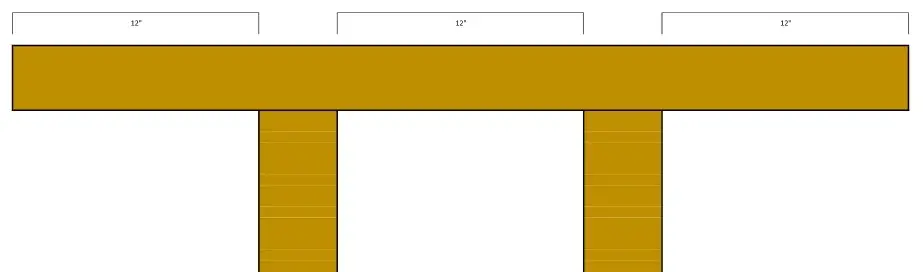
A 2×4 is much stronger standing on edge than lying flat.
Example:
Strong:  3.5" vertical depth
Weak:    1.5" vertical depth
A 2×4 on edge may hold several times more than the same board laid flat because bending strength depends heavily on vertical depth.
Rough homeowner examples
For a single 2×4 on edge with weight centered in the middle:
| Span | Rough safe load idea |
|---|---|
| 2 ft | High — often hundreds of pounds |
| 4 ft | Moderate — maybe a few hundred pounds |
| 6 ft | Much lower; sag becomes important |
| 8 ft+ | Usually not appropriate for heavy loads |
For construction, don’t use internet guesses. Use span tables or an engineer, especially for decks, floors, roofs, lofts, aquariums, hanging chairs, or anything overhead.
Vertical 2×4 stud/post
A vertical 2×4 can carry a lot more because it is in compression, but it can buckle if it is tall, unsupported, crooked, damaged, or poorly fastened. Simpson Strong-Tie notes post capacity tables depend on factors like post height and National Design Specification assumptions.
Main things that reduce capacity
Knots, cracks, wet wood, poor-grade lumber, long spans, load in the center, 2×4 laid flat, weak screws/nails, bad connections, and repeated/live loads all reduce strength.
Best rule
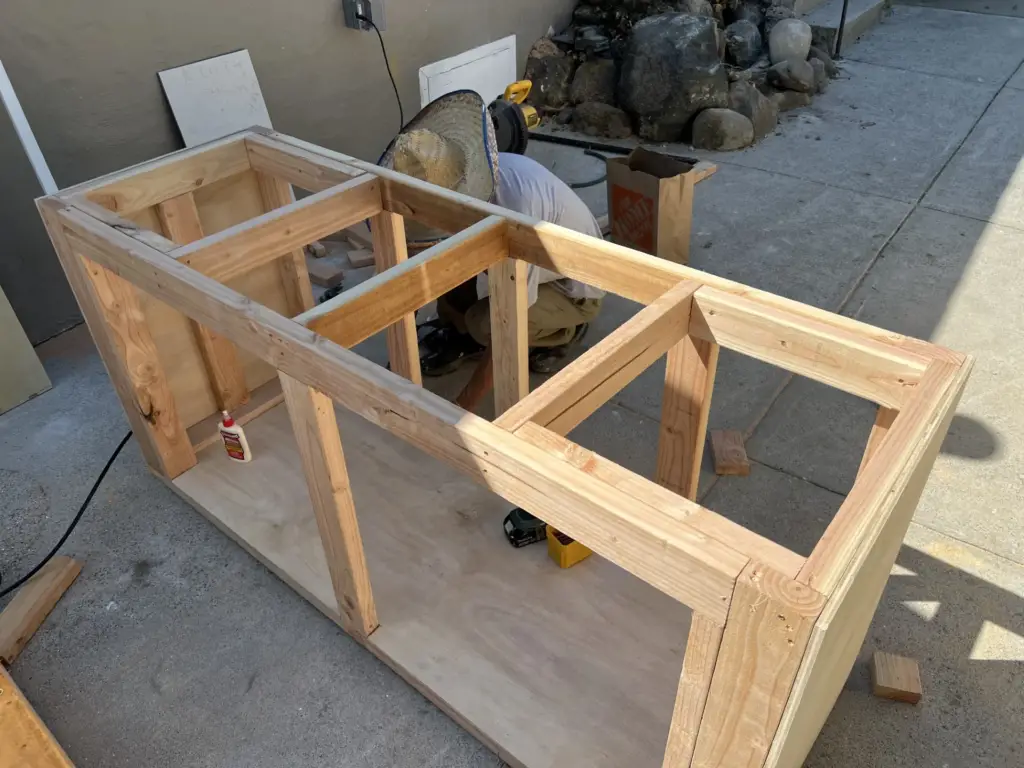
For shelves, benches, temporary projects: a 2×4 can be very strong if short, supported well, and on edge.
For structural work: use official span tables, local code, or an engineer. A 2×4 is often too small for floor/deck joists over meaningful spans.
FAQs
How much weight can a horizontal 2×4 hold?
It depends mainly on:
Span length
Whether it is on edge or flat
Wood quality
Load placement
A short 2×4 on edge may hold several hundred pounds.
A long-span 2×4 laid flat can sag under relatively small loads.
Is a 2×4 stronger on edge?
Yes — dramatically stronger.
A 2×4 standing upright uses its 3.5-inch dimension vertically, which greatly increases bending resistance.
This is why wall studs and joists are installed on edge.
Can a 2×4 support a person?
Usually yes, if:
The span is short
The board is on edge
The wood is in good condition
The supports are secure
But a long unsupported 2×4 may bend, crack, or fail.
Can I use a 2×4 as a floor joist?
Sometimes for very short spans, but often no.
Most floors use larger lumber like:
2×6
2×8
2×10
Engineered joists
Building codes usually limit 2×4 joists to short spans and light loads.
How much weight can a 2×4 shelf hold?
A shelf frame made from 2x4s can hold a lot if properly braced.
Usually the weak points are:
Screws
Wall anchors
Shelf material
Stud attachment
A well-built garage shelf with multiple supports may hold hundreds of pounds.
Does wood type matter?
Yes.
Common framing woods include:
Douglas fir
Southern yellow pine
SPF (spruce-pine-fir)
Southern yellow pine is usually stronger than SPF.
READ ALSO: Types of Wood burnishing tools