
Table of Contents
Can you put polyurethane over polycrylic?
Yes, you can. It works on wood, furniture, and floors if done correctly.
But here’s the key:
👉 It’s not ideal, and mistakes = peeling, cloudiness, or uneven finish.
🧪 Understanding the materials (important)
Polycrylic
- Water-based finish
- Dries fast, low odor
- Stays clear (no yellowing)
- Less durable
Polyurethane
- Oil-based or water-based
- Slower drying
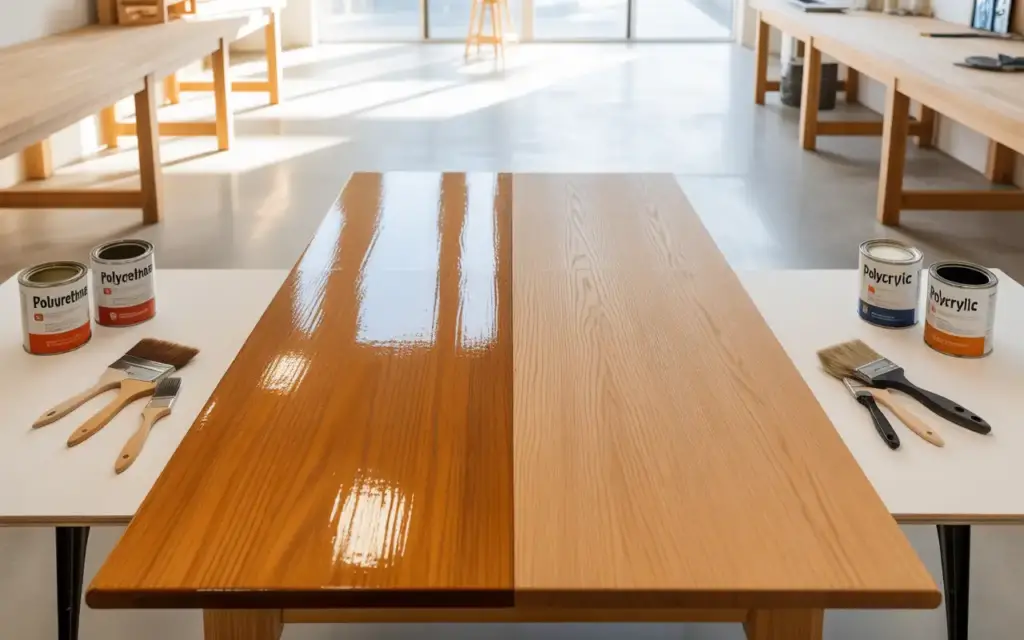
- Much more durable and water-resistant
- Oil-based version may yellow over time
👉 That difference is why mixing them is tricky.
⚠️ When it works vs when it fails
✔️ Works best when:
- You use water-based polyurethane over polycrylic
- The base layer is fully cured
- You sand properly
❌ High risk when:
- Oil-based polyurethane over fresh polycrylic
- No sanding (no adhesion)
- Thick coats
- Rushing drying times
🛠️ Step-by-step application (do this exactly)
1. Let polycrylic fully cure
- Minimum: 24 hours
- Safer: 48 hours+
👉 Dry ≠ cured. This is where most people mess up.
2. Light sanding
- Use 220–320 grit
- You’re NOT removing it—just scuffing
✔ This step is critical for adhesion
3. Clean the surface
- Vacuum or wipe with tack cloth
- Any dust = rough finish
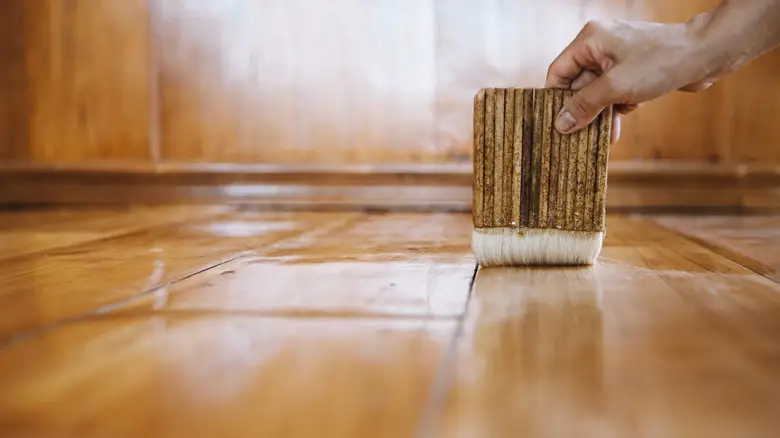
4. Apply polyurethane (thin coats!)
- Use brush, foam, or spray
- First coat = very thin
5. Sand between coats
- Light sanding again (220+ grit)
- Smooths bubbles + improves bonding
6. Apply 2–3 coats
- 3 coats = best durability
7. Let it cure fully
- Dry to touch: hours
- Full cure: up to 30 days
✅ If you really want to do it
Follow this exactly:
- Let the polycrylic fully cure
- Not just dry — wait at least 24–48 hours (longer is safer)
- Lightly sand
- Use 220–320 grit
- Goal: create “tooth” so polyurethane sticks
- Clean thoroughly
- Remove ALL dust (tack cloth or microfiber)
- Apply thin coats of polyurethane
- Don’t flood it
- First coat should be very light
💡 Better option (recommended)
Instead of mixing:
- Stick with all polycrylic (for clarity & indoor use)
- OR use all polyurethane (for durability)
Mixing finishes is where most problems happen.
⚠️ Common problems (and why they happen)
❌ Peeling / flaking
Cause: no sanding or poor curing
❌ Cloudy finish
Cause: moisture trapped or incompatible layers
❌ Yellow tint
Cause: oil-based polyurethane
❌ Sticky surface
Cause: applying over uncured polycrylic
🧠 Pro tips (this is what pros actually do)
- ✔ Prefer same system layering (all water-based OR all oil-based)
- ✔ If you want durability → use polyurethane from the start
- ✔ If already applied polycrylic → consider sanding it off for best results
- ✔ For light-colored wood → avoid oil-based poly (it yellows)
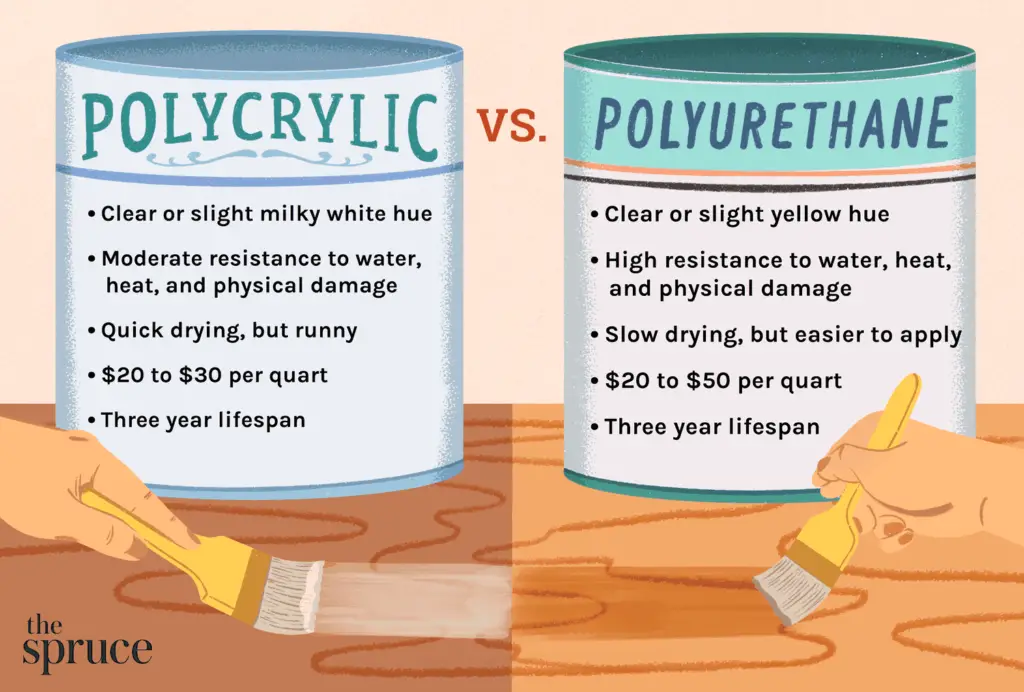
🆚 Polycrylic vs Polyurethane (quick review)
| Feature | Polycrylic | Polyurethane |
|---|---|---|
| Dry time | Fast | Slow |
| Durability | Medium | High |
| Color | Clear | Slight yellow (oil-based) |
| Ease of use | Easy | Harder |
| Best use | Indoor, low wear | Floors, tables, heavy use |
👉 Polyurethane wins for protection, especially for high-traffic surfaces
🧪 What’s the difference?
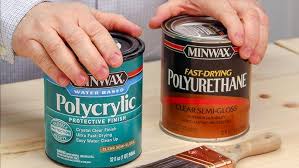
- Polycrylic (like Minwax Polycrylic) = water-based, dries fast, clear, less odor
- Polyurethane (like Minwax Fast-Drying Polyurethane) = oil-based (usually), more durable, amber tint
🧾 Final verdict
✔ You can put polyurethane over polycrylic
❗ But only if you prep it properly
👉 Best real-world advice:
- If the project matters → don’t mix systems
- If you already did → follow the sanding + curing steps perfectly
FAQs
Can you put polyurethane over polycrylic?
Yes, but only if:
The polycrylic is fully cured
You sand it lightly
You apply thin coats
👉 Otherwise, it may peel or look cloudy.
Is it better to use water-based or oil-based polyurethane over polycrylic?
✔ Water-based polyurethane = safest choice
❗ Oil-based = riskier (adhesion + yellowing issues)
👉 If you want fewer problems, stick to water-based.
Do I need to sand before applying polyurethane?
Yes — always.
Use 220–320 grit
Light scuff only (don’t remove the layer)
👉 No sanding = high chance of peeling later.
How long should polycrylic dry before polyurethane?
Minimum: 24 hours
Recommended: 48 hours+
👉 If it’s even slightly soft → wait longer.
Will polyurethane stick without sanding?
Sometimes… but don’t risk it.
👉 It might look fine at first, then start peeling weeks later.
READ ALSO: Best primer for outdoor wood