
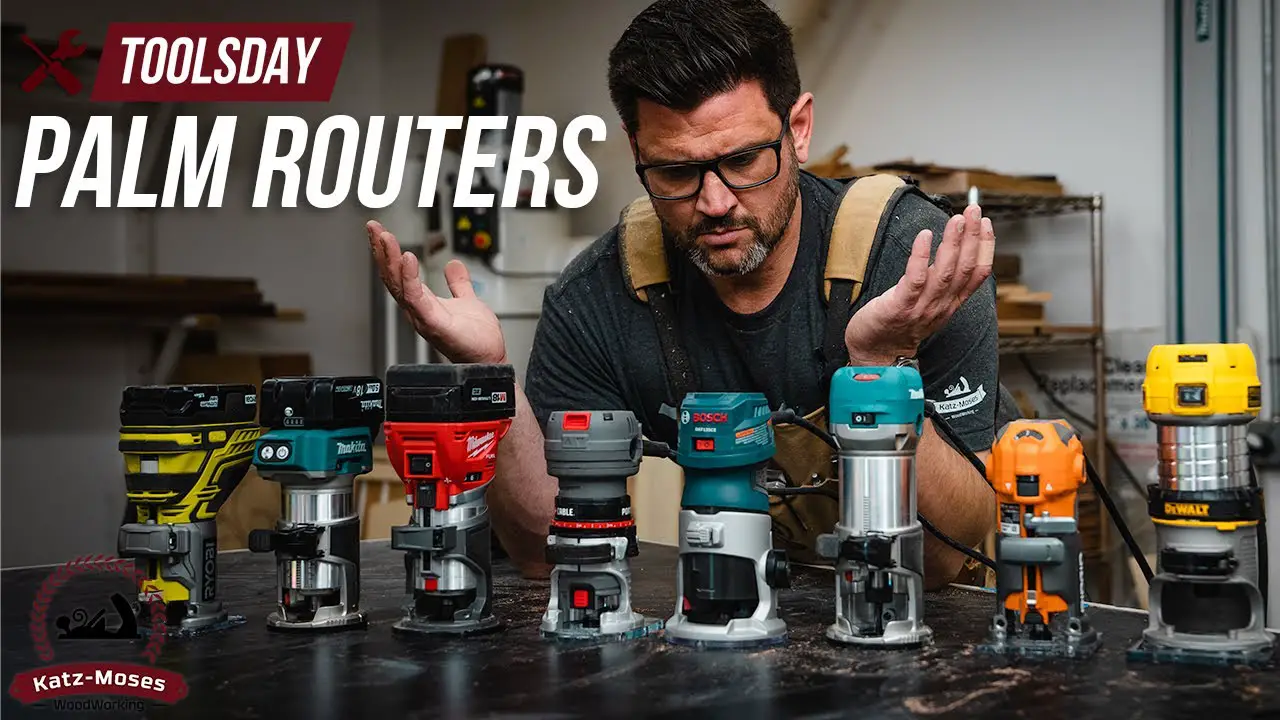
Best Palm Router
Table of Contents
A palm router, also called a trim router or compact router, is one of the most useful tools for woodworking. Whether you’re rounding over furniture edges, trimming laminate, cutting decorative profiles, or creating precise grooves, a quality palm router makes the job easier and more accurate.
Unlike large woodworking routers, palm routers are lightweight, compact, and designed for excellent control during detailed work. They are especially popular among DIY enthusiasts, furniture makers, cabinet installers, and professional carpenters.
However, not all palm routers deliver the same performance. Some prioritize power, while others focus on precision, portability, affordability, or versatility.
Best palm routers at a glance
| Palm router | Best for | Power source |
|---|---|---|
| Makita RT0701C | Best overall corded | 6.5A corded |
| DeWalt DCW600B | Best cordless for most users | 20V MAX battery |
| Bosch Colt GKF125CE | Precision woodworking | 7A corded |
| Milwaukee M18 FUEL 2723-20 | Professional cordless use | M18 battery |
| DeWalt DWP611 | Versatility and plunge-base upgrades | 7A corded |
| Bosch Colt PR20EVS | Light-duty trim and edge work | 5.6A corded |
| Ryobi ONE+ PCL424B | Budget-conscious cordless users | 18V battery |
These selections weigh manufacturer specifications, tool features, and published reviews. They are editorial recommendations, not the results of hands-on testing conducted for this guide.
Makita RT0701C — Best overall corded palm router
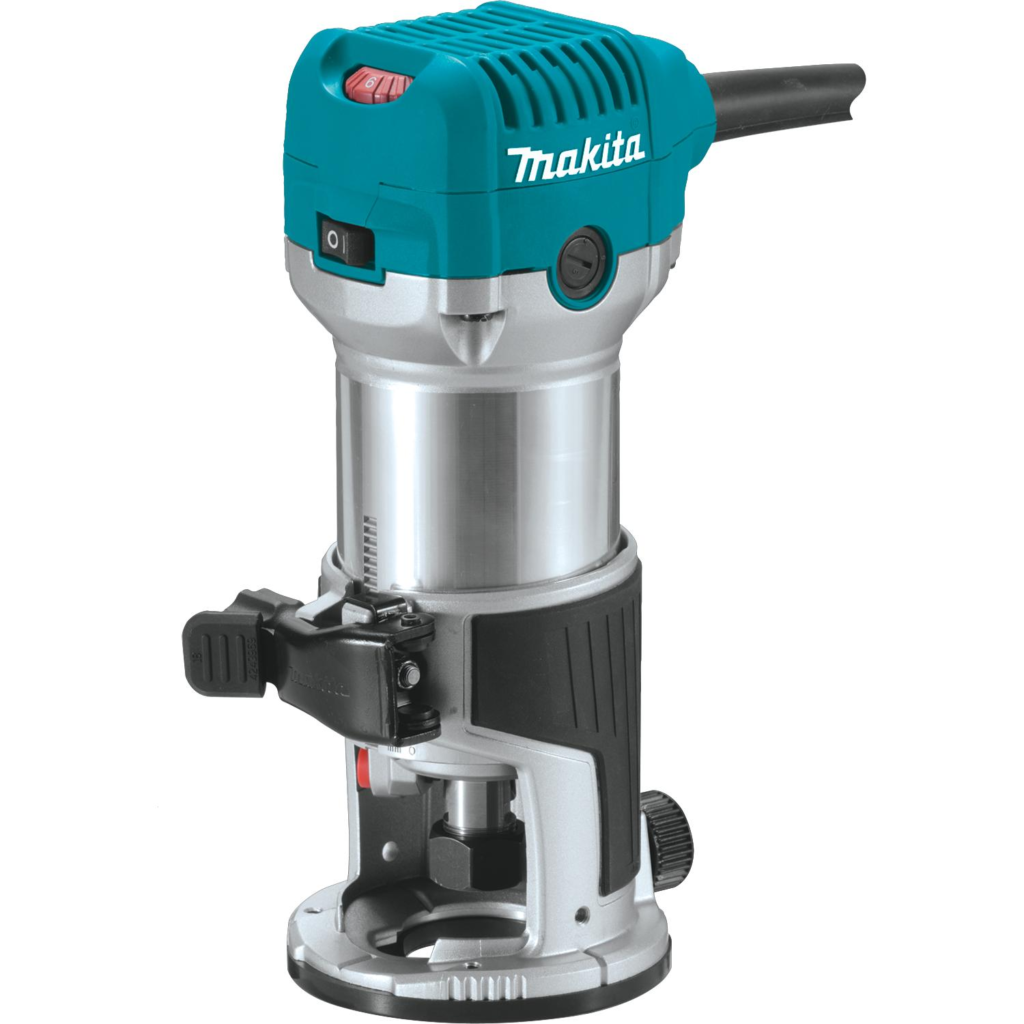
Makita RT0701C Compact Router
Best overall corded
A highly versatile compact router featuring a powerful motor, accurate depth adjustments, and comfortable handling.
The Makita RT0701C is an excellent choice for woodworkers who want a reliable, versatile tool without paying the premium associated with cordless equipment.
Its 1¼ maximum-horsepower motor provides sufficient power for edge profiling, laminate trimming, hinge recesses, and many smaller joinery tasks.
One standout feature is the rack-and-pinion depth adjustment system, which allows precise changes to cutting depth. The aluminum housing adds durability, while the slim design improves control.
Key specifications
| Feature | Specification |
|---|---|
| Power | 6.5 amps |
| Maximum horsepower | 1¼ HP |
| Speed | 10,000–30,000 RPM |
| Collet | ¼ inch |
| Weight | 3.9 lbs |
| Soft start | Yes |
| Variable speed | Yes |
Specifications: Makita official product page.
Pros
- Excellent precision and depth adjustment.
- Smooth starting and electronic speed control.
- Durable aluminum motor housing.
- Compatible with optional alternative bases.
- Comfortable for extended woodworking sessions.
Cons
- No built-in LED lighting.
- Power cord can restrict movement.
- Plunge and offset bases typically cost extra.
Verdict: The Makita RT0701C is our top corded recommendation for homeowners and woodworking enthusiasts. It combines professional-grade features with the simplicity of a compact tool.
DeWalt DCW600B — Best cordless palm router
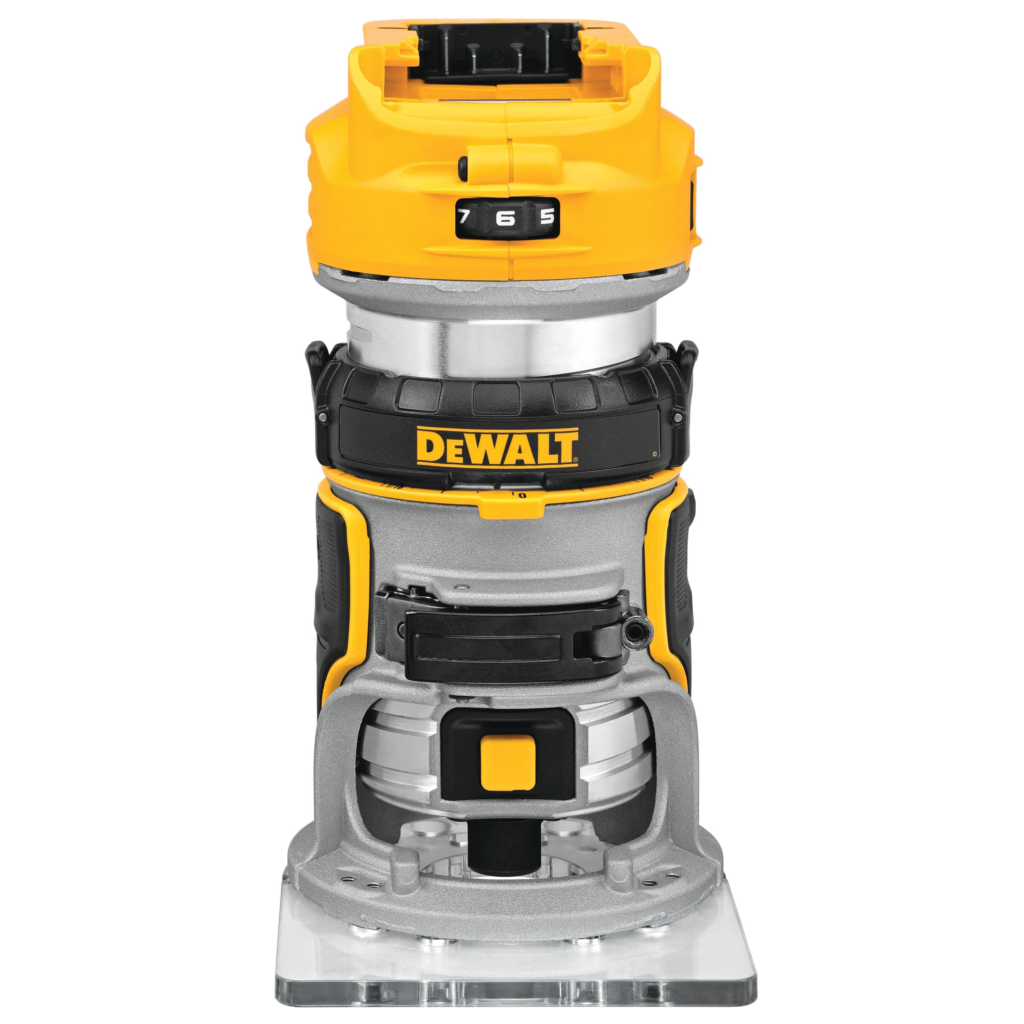
DeWalt DCW600B 20V MAX XR Compact Router
Best cordless for most users
A brushless cordless router offering excellent mobility, practical electronic controls, and clear visibility of the cutting area.
The DeWalt DCW600B is an excellent solution for contractors, cabinet installers, and DIY enthusiasts who prefer working without a power cord.
Its brushless motor is designed to provide performance comparable to a corded compact router. The variable-speed control makes it suitable for different wood species and router bits.
One particularly useful feature is its dual LED lighting system, which illuminates the cutting area. The electronic brake also helps reduce the time the bit continues spinning after switching the router off.
Key features
- 20V MAX battery platform (18V nominal).
- Brushless motor for efficiency and performance.
- Variable-speed adjustment.
- Dual LED work lights.
- Soft-start motor and electronic speed feedback.
- Precision depth adjustment ring.
- Electronic motor brake.
Pros
- Excellent portability, good cutting visibility, comfortable handling, and convenient compatibility with DeWalt 20V MAX batteries.
Cons
- Battery and charger are sold separately with the DCW600B bare tool. Battery weight can also make the router feel more top-heavy than some corded models.
Verdict: One of the best cordless palm routers for furniture making, cabinetry, and on-site woodworking, especially for anyone already using DeWalt batteries.
Source: DeWalt official specifications.
READ ALSO: How Long Do DeWALT Batteries Take To Charge?
Bosch Colt GKF125CE — Best for precision woodworking
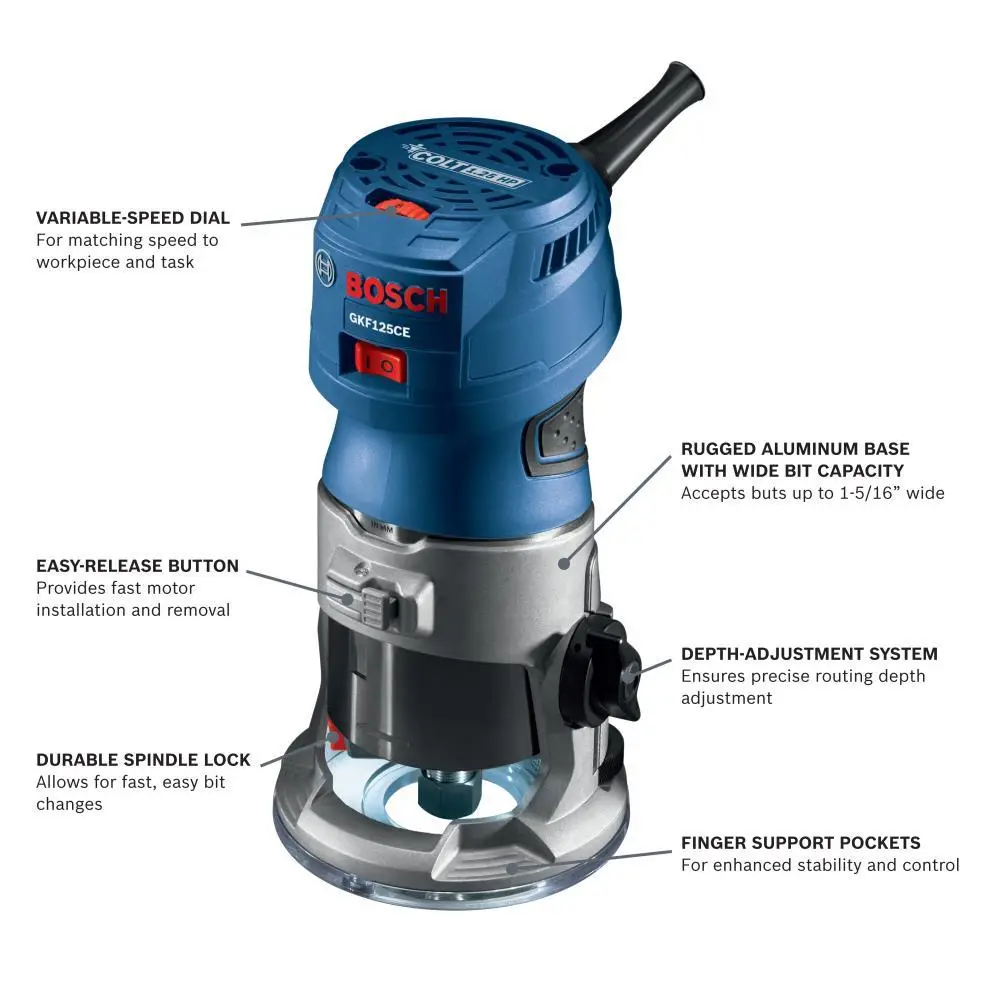
Bosch Colt GKF125CE Palm Router
Best for controlled edge profiles, templates, and precision adjustments.
The Bosch Colt GKF125CE is designed for woodworkers who prioritize precision and control.
Its 7-amp motor delivers a maximum rated 1¼ horsepower, while the variable-speed system provides speeds from 16,000 to 35,000 RPM.
The precision depth-adjustment mechanism is particularly helpful when creating matching profiles or performing repeated cuts. Bosch also incorporates finger-support pockets to improve stability when working close to an edge.
Key specifications
| Feature | Specification |
|---|---|
| Motor | 7 amps |
| Maximum horsepower | 1¼ HP |
| Speed | 16,000–35,000 RPM |
| Collet | ¼ inch |
| Base | Aluminum fixed base |
| Variable speed | Yes |
Pros
- Accurate depth control, sturdy construction, useful ergonomic features, and a strong motor for compact routing.
Cons
- More expensive than some basic trim routers; still limited to compact-router applications and ¼-inch-shank bits.
Verdict: A strong option for dedicated woodworking enthusiasts who value precise adjustments over cordless mobility. The GKF125CE family includes different kit versions, so check which accessories are included before buying.
Source: Bosch official product specifications.
Milwaukee M18 FUEL 2723-20 — Best professional cordless palm router
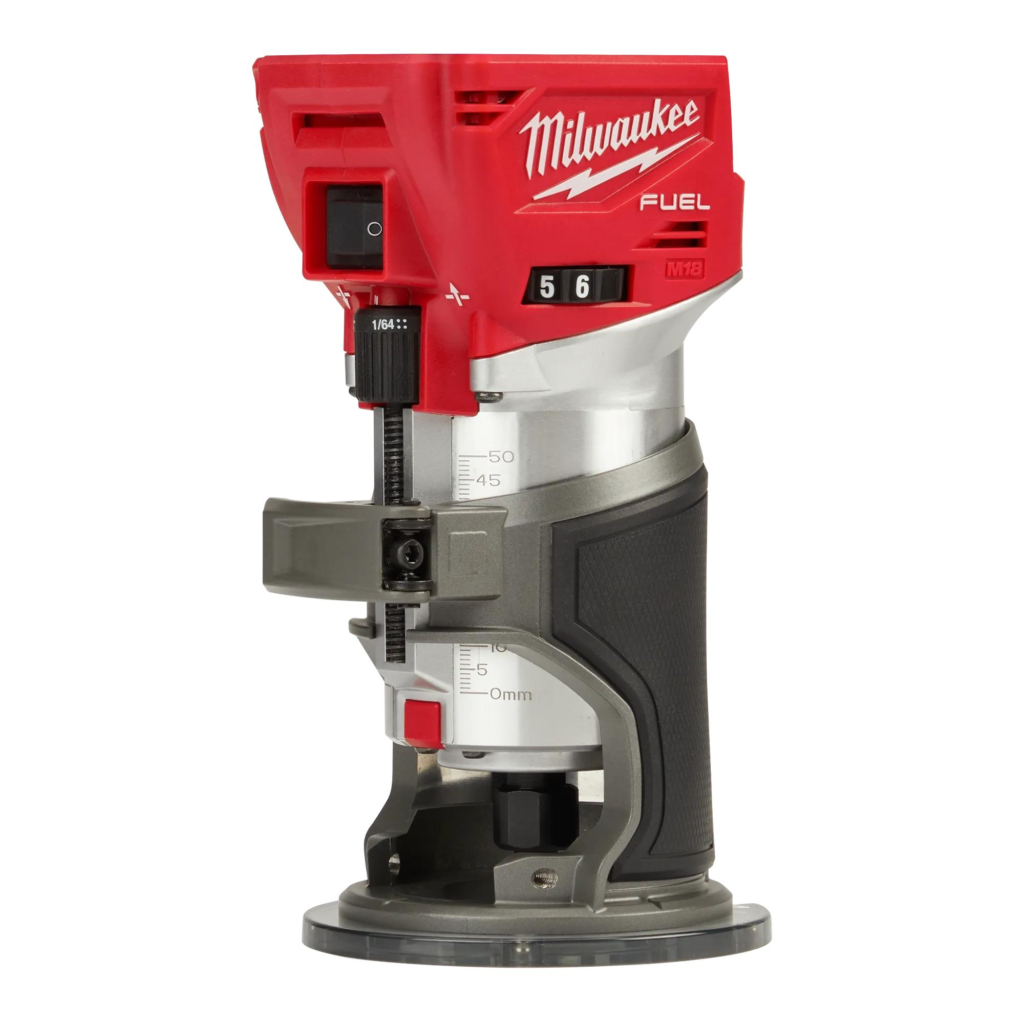
Milwaukee M18 FUEL 2723-20 Compact Router
Best for professional tradespeople who need a capable cordless trim router.
The Milwaukee M18 FUEL 2723-20 is built around a brushless POWERSTATE motor, adjustable cutting speed, and precise depth-control mechanisms.
It runs from 10,000 to 31,000 RPM and includes dual LED lights for improved visibility.
Milwaukee specifies that the tool can complete up to 250 feet of ⅜-inch roundover cuts in red oak using an M18 XC5.0 battery. This is a manufacturer-reported performance figure under specific conditions, not a guarantee of runtime across all applications.
The router also includes macro and micro depth adjustments, making it especially useful for repeatable routing operations.
Pros
- Powerful brushless motor, excellent cordless mobility, precise depth control, dual LEDs, and included guide accessories.
Cons
- Premium equipment cost, extra battery expense, and additional purchases for a plunge or offset base.
Verdict: A particularly compelling choice for professionals already invested in Milwaukee’s M18 battery system.
Source: Milwaukee official specifications.
DeWalt DWP611 — Best corded router for versatility
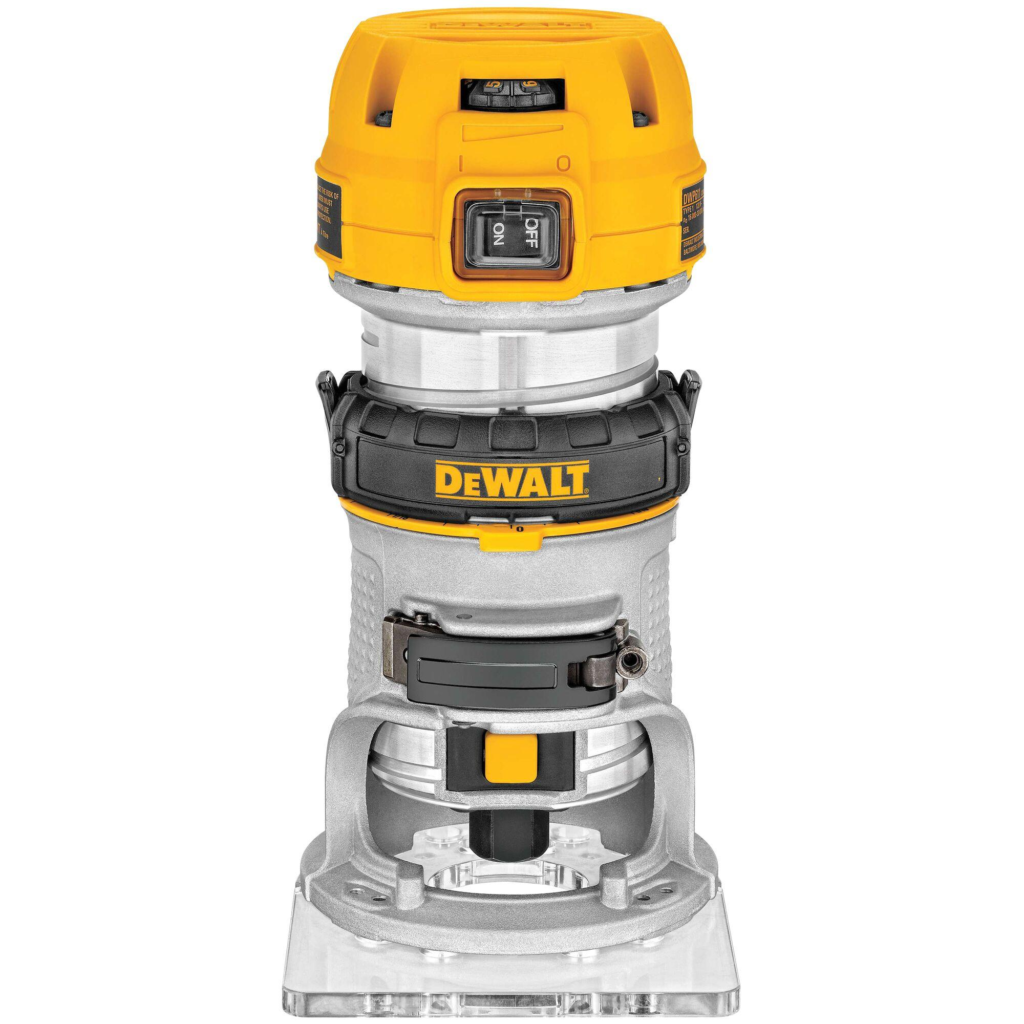
DeWalt DWP611 Compact Router
Best for users who want a strong corded tool with accurate depth adjustment and plunge-base compatibility.
The DeWalt DWP611 combines a 7-amp motor with electronic speed control, dual LED lights, and a clear fixed base.
Its variable-speed motor runs up to 27,000 RPM, providing flexibility across different cutting tasks. The depth adjustment ring allows fine changes down to 1/64 inch.
An especially attractive feature is the availability of the DWP611PK combination kit, which adds a plunge base for mortises, grooves, and controlled internal cuts.
Pros
- Strong motor, clear cutting visibility, precise depth adjustment, robust construction, and optional plunge capability.
Cons
- Heavier and bulkier than very small laminate trimmers, with an additional cord to manage.
Verdict: One of the most versatile corded palm router choices if you want to handle both edge finishing and light joinery.
Source: DeWalt DWP611 official product page.
Bosch Colt PR20EVS — Best for lightweight trimming
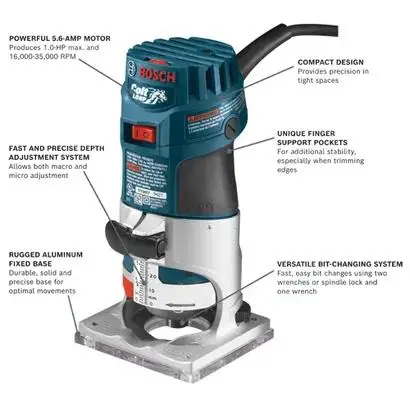
Best for lighter edge finishing, laminate trimming, and comfortable handheld operation.
Bosch Colt PR20EVS Palm Router
The Bosch PR20EVS has a 5.6-amp motor rated at a maximum 1 HP. Although less powerful than the larger Colt GKF125CE, it remains highly capable for routine edge treatments and finishing work.
The router offers variable speed between 16,000 and 35,000 RPM, electronic speed stabilization, and a soft-start feature.
Its compact design and finger-support pockets are particularly beneficial during one-handed trimming tasks.
Pros
- Compact and comfortable, precise depth adjustment, sturdy aluminum fixed base, and suitable performance for edge finishing.
Cons
- Less power than 7-amp competitors and no integrated LED illumination in the standard version.
Verdict: A practical choice for DIY woodworking, especially when the primary tasks are light profiles, laminate edges, and finishing.
Source: Bosch PR20EVS official specifications.
Ryobi ONE+ PCL424B — Best affordable cordless option
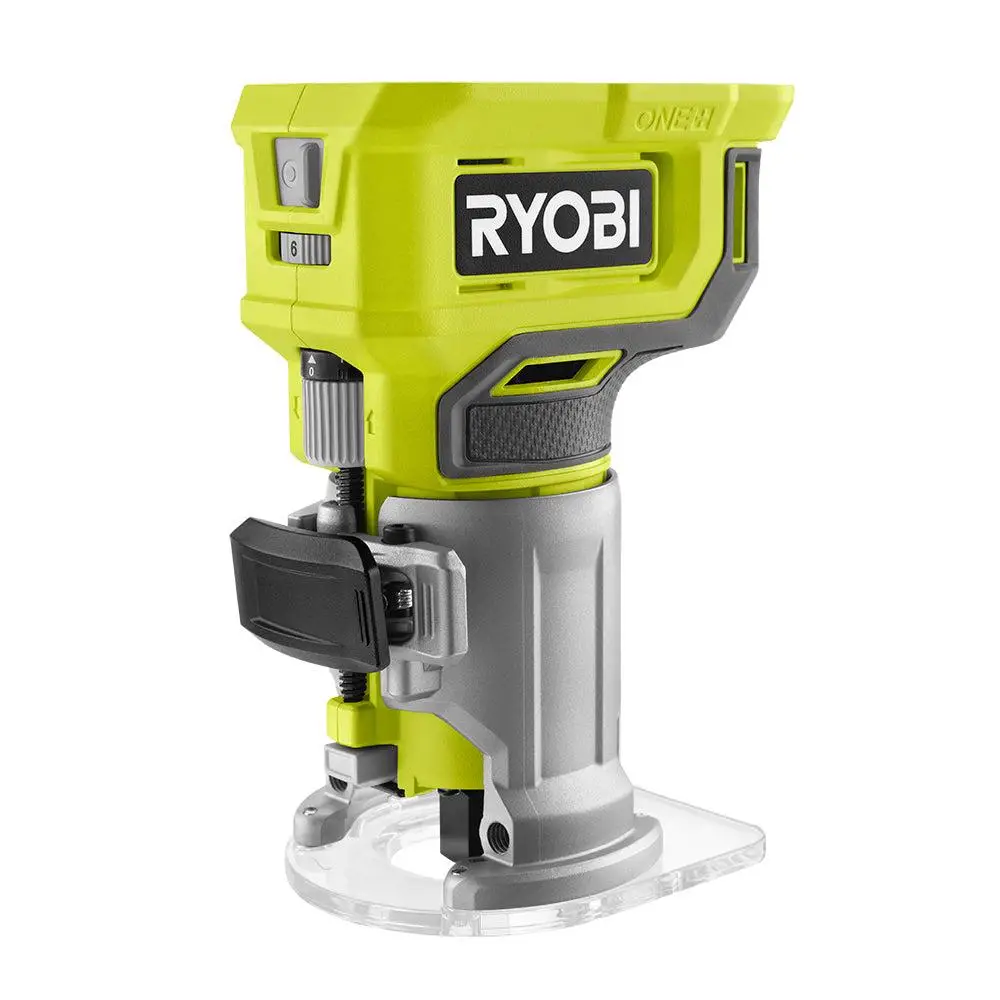
Ryobi ONE+ PCL424B Compact Router
Best for budget-conscious DIY users and owners of Ryobi 18V batteries.
For occasional woodworking projects, the Ryobi PCL424B offers a convenient entry into cordless routing.
This compact router operates on Ryobi’s 18V ONE+ battery platform and provides variable-speed control, with speeds reaching up to 30,000 RPM.
Its relatively simple design makes it well suited to rounding over shelving, trimming edges, and small decorative projects.
Pros
- Accessible price positioning, cordless convenience, compact housing, and compatibility with Ryobi ONE+ batteries.
Cons
- Not our first choice for sustained heavy cuts, and the total cost increases if a battery and charger are required.
Verdict: A worthwhile choice for weekend woodworkers who want cordless convenience without investing in a premium professional system.
Source: Ryobi official product page.
Palm router comparison: Corded vs. cordless
Choosing between a corded and cordless palm router is one of the most important decisions.
| Feature | Corded router | Cordless router |
|---|---|---|
| Power supply | Electrical outlet | Rechargeable battery |
| Runtime | Continuous | Limited by battery |
| Portability | Restricted by cord | Excellent |
| Weight balance | Often lighter | Battery adds weight |
| Initial cost | Usually lower | Often higher |
| Best for | Workshop projects | Job sites and mobile work |
| Maintenance | No battery care | Battery management required |
For most people working primarily in a home workshop, a corded router offers better value. However, cordless models are especially practical when trimming large furniture pieces, working outdoors, or moving between job sites.
How to choose the best palm router
- Motor power
Palm routers typically have motors around 1–1¼ maximum horsepower, although actual ratings and measurement methods vary by manufacturer.
A more powerful motor can help maintain cutting performance when working with hardwood or making deeper cuts.
For light edge trimming, a 5.6-amp corded router may be entirely sufficient. For more demanding applications, a 6.5- or 7-amp model offers additional capability.
- Variable-speed control
Variable speed allows you to adjust the router to the bit, material, and cutting conditions.
Smaller bits often operate efficiently at higher speeds, while larger-diameter bits may require lower speeds.
Always follow the router-bit manufacturer’s maximum RPM rating rather than relying on a generic speed chart.
- Depth adjustment
Depth control has a significant influence on routing accuracy.
Look for a router with fine or micro depth adjustments, a reliable locking mechanism, and easy-to-read scales.
For decorative profiles and precise joinery, reliable depth adjustment is often more important than a small difference in maximum motor power.
- Ergonomics and weight
A palm router should feel stable and controllable in your hand.
Consider grip diameter, weight distribution, vibration, and the position of the on/off switch.
A cordless router with a large battery may feel substantially different from the same model fitted with a compact battery.
- Fixed base vs. plunge base
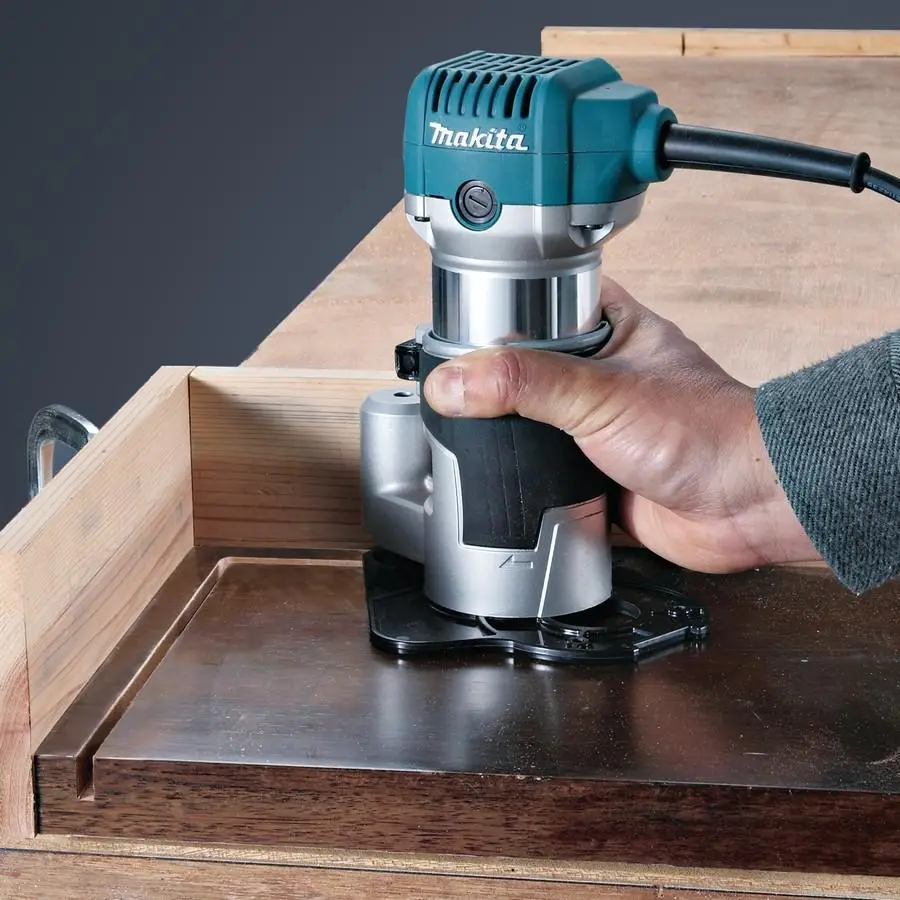
Fixed base
Ideal for edge profiling, flush trimming, and straightforward cuts at a preset depth.
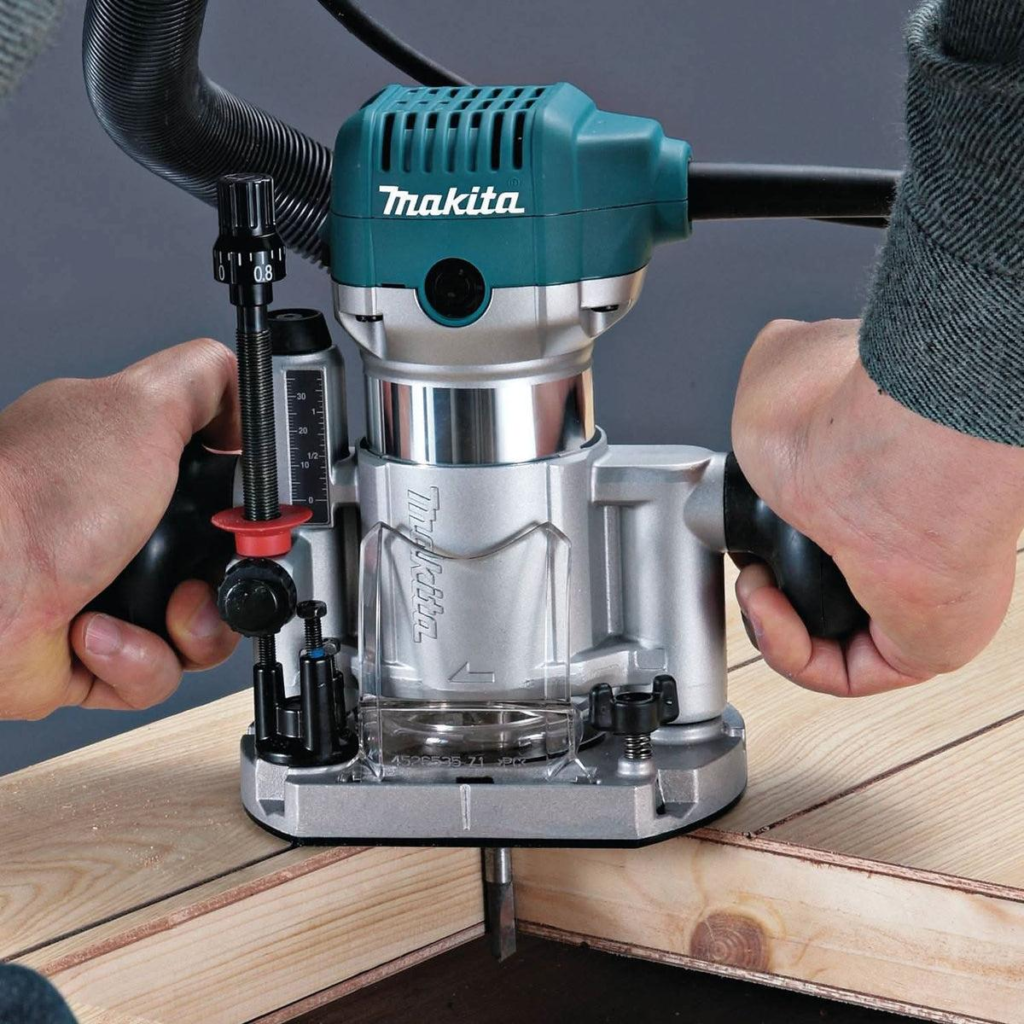
Plunge base
Allows the bit to enter the workpiece from above for mortises, stopped grooves, and interior routing.
If you plan to perform various woodworking tasks, a palm router with an available plunge-base attachment provides greater versatility.
- Router-bit compatibility
Most compact palm routers use ¼-inch-shank bits in the US market.
Common applications include:
- Roundover bits for smooth, rounded furniture edges.
- Chamfer bits for angled decorative edges.
- Flush-trim bits for matching templates and trimming laminate.
- Straight bits for grooves and recesses.
- Rabbeting bits for cutting stepped edges.
Check the collet diameter, maximum cutter diameter, base opening, and the manufacturer’s approved accessories before purchasing bits. Never fit an incompatible bit or collet.
- Dust collection
Wood routing can generate substantial amounts of fine dust.
A dust-extraction adapter connected to a suitable vacuum helps improve visibility and reduce airborne dust. Dust collection is particularly valuable when working with MDF and plywood.
Not all compact routers include dust-collection accessories, so check availability before buying.
How to use a palm router safely and effectively
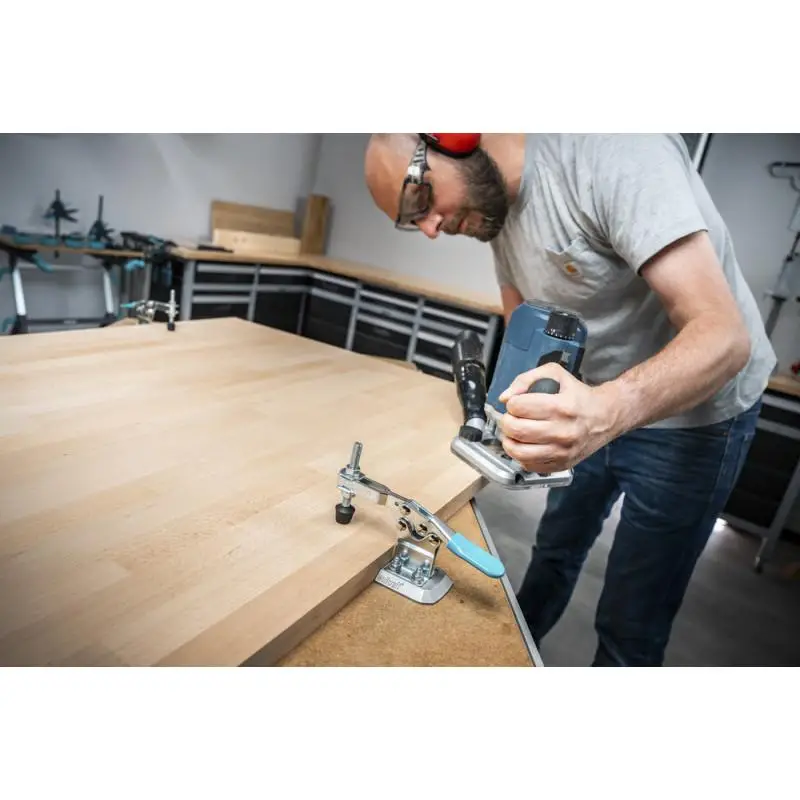
Step 1: Secure the workpiece
Clamp your wood firmly to a stable workbench. Avoid holding small pieces by hand while routing.
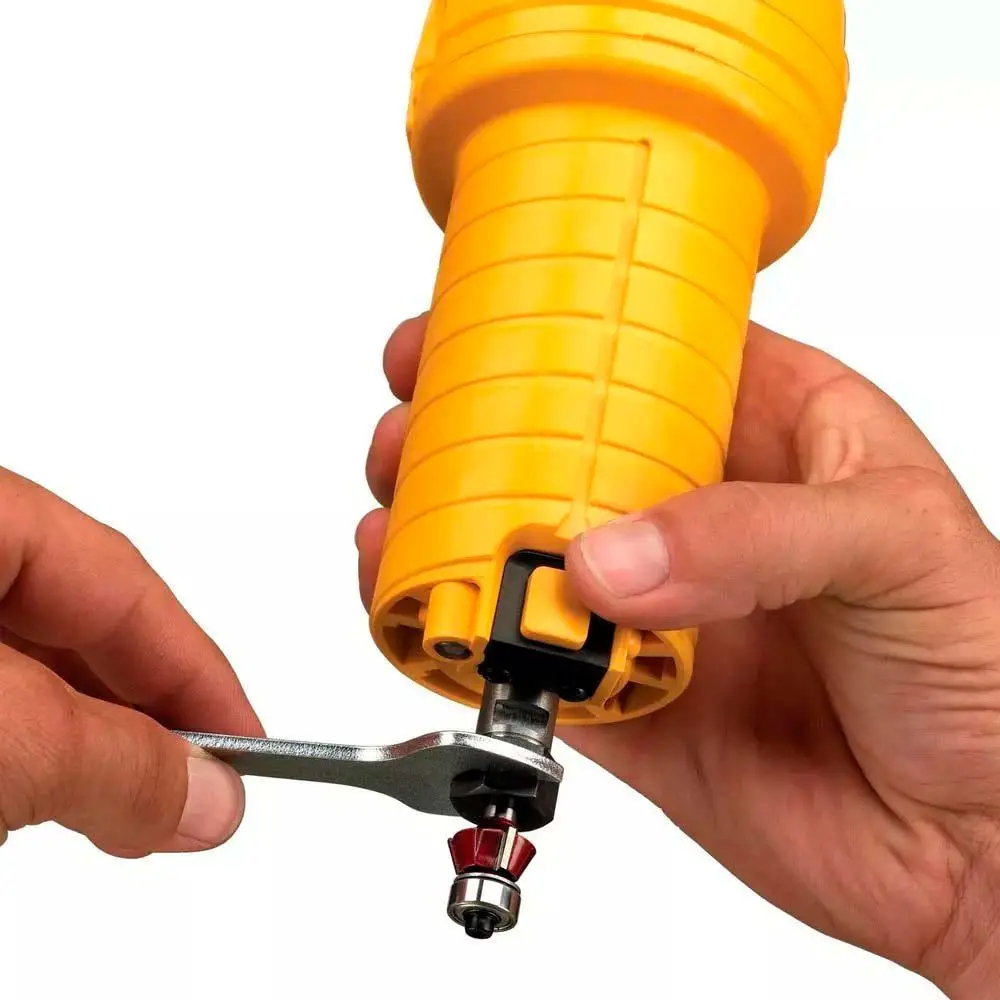
Step 2: Install the correct router bit
Disconnect the power or remove the battery. Insert the appropriate bit according to the manufacturer’s instructions and tighten the collet securely.
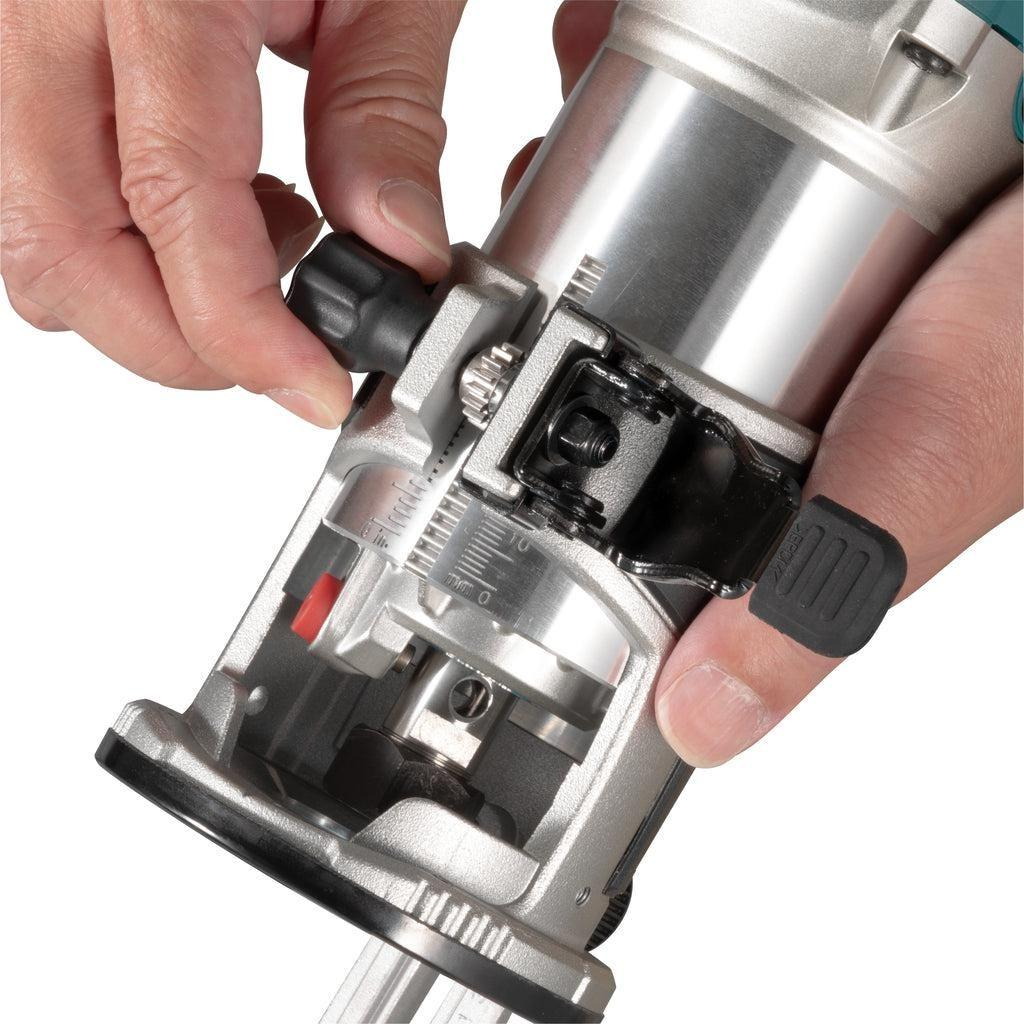
Step 3: Set the cutting depth
For deeper profiles, plan multiple shallow passes instead of removing too much material at once.
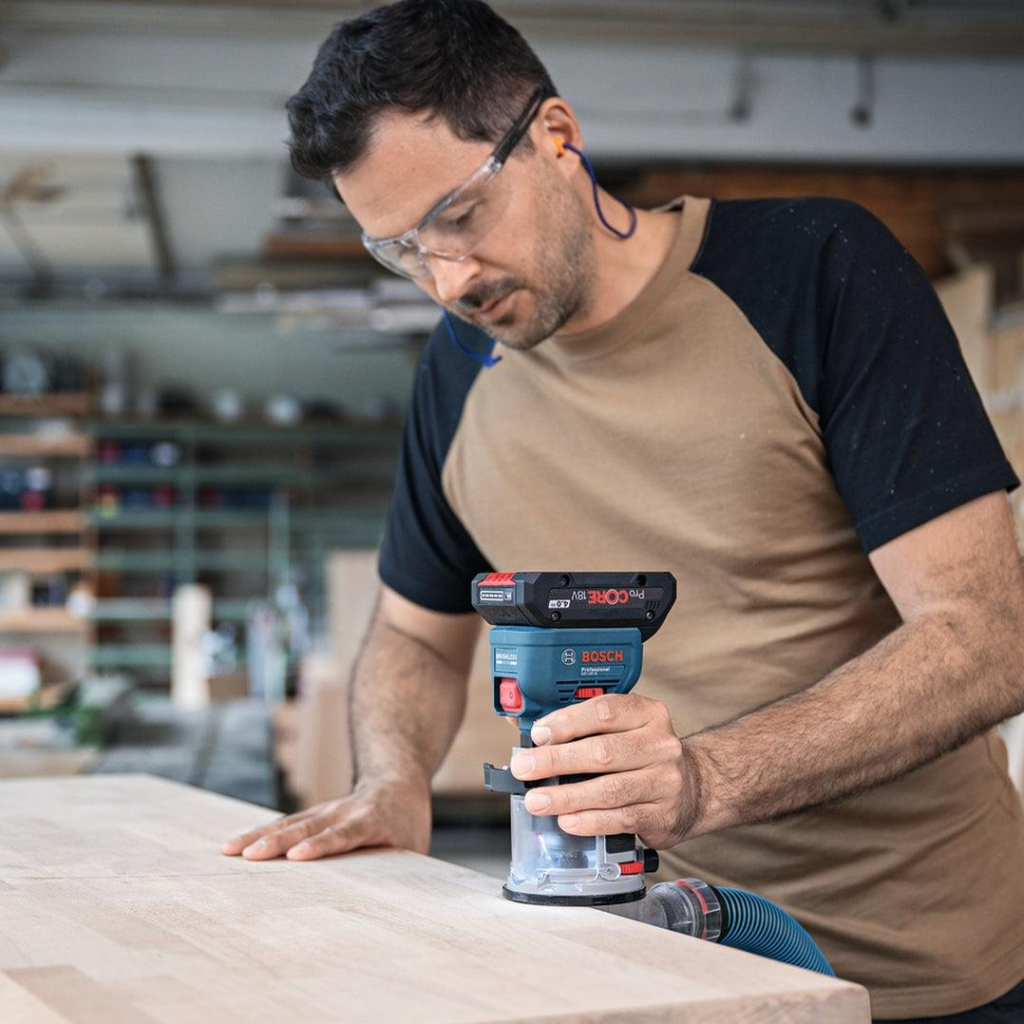
Step 4: Make a controlled cut
eep the base supported, allow the bit to reach full operating speed, and feed the router smoothly. For typical outside-edge routing, move counterclockwise around the workpiece; for inside openings, move clockwise. Follow the bit’s rotation and manufacturer instructions.
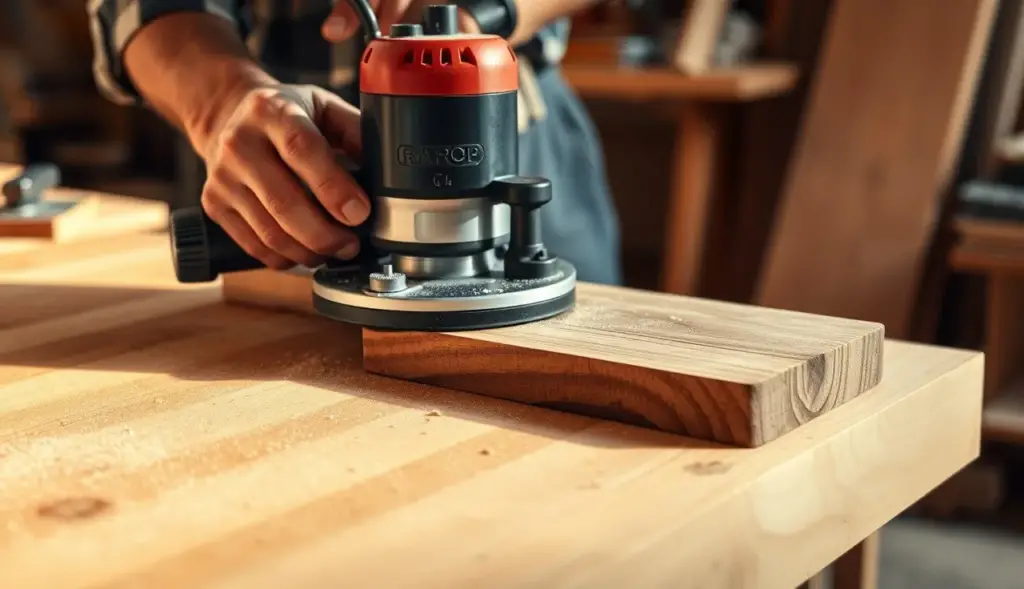
Step 5: Inspect the finish
Switch off the router and allow the bit to stop completely before setting the tool down. Inspect the profile and lightly sand any rough areas.
Always wear eye protection and appropriate hearing protection, and use suitable respiratory protection and dust extraction. Keep your hands away from the cutter and use a guide or jig whenever needed for stability.
Common mistakes to avoid
| Mistake | Why it matters | Better approach |
|---|---|---|
| Cutting too deeply | Can cause burning, chatter, or loss of control | Use multiple shallow passes |
| Using dull bits | Produces rough edges and extra heat | Use sharp, suitable bits |
| Moving too quickly | Can leave uneven cuts | Maintain controlled feed pressure |
| Inadequate workholding | Increases risk of movement and kickback | Clamp the workpiece securely |
| Wrong router speed | Can damage the workpiece or exceed bit limits | Follow bit speed specifications |
| Ignoring grain direction | Can cause tear-out | Test on scrap and adjust the cutting strategy |
| Routing without eye protection | Exposes eyes to flying chips | Wear properly fitted safety glasses |
Palm router maintenance tips
A quality palm router can provide years of reliable service when properly maintained.
After use, remove wood dust from the exterior and ventilation openings, inspect the collet for debris, and check the base for wear or damage. Never clean or adjust the tool while connected to a power source.
For cordless models, store batteries according to the manufacturer’s recommendations and avoid exposing them to extreme heat or moisture.
For corded models, periodically inspect the cable for cuts, damaged insulation, and loose connections.
Replace worn bits and damaged accessories promptly. Avoid lubricating internal components unless specifically instructed by the manufacturer.
Final verdict: What is the best palm router in 2026?
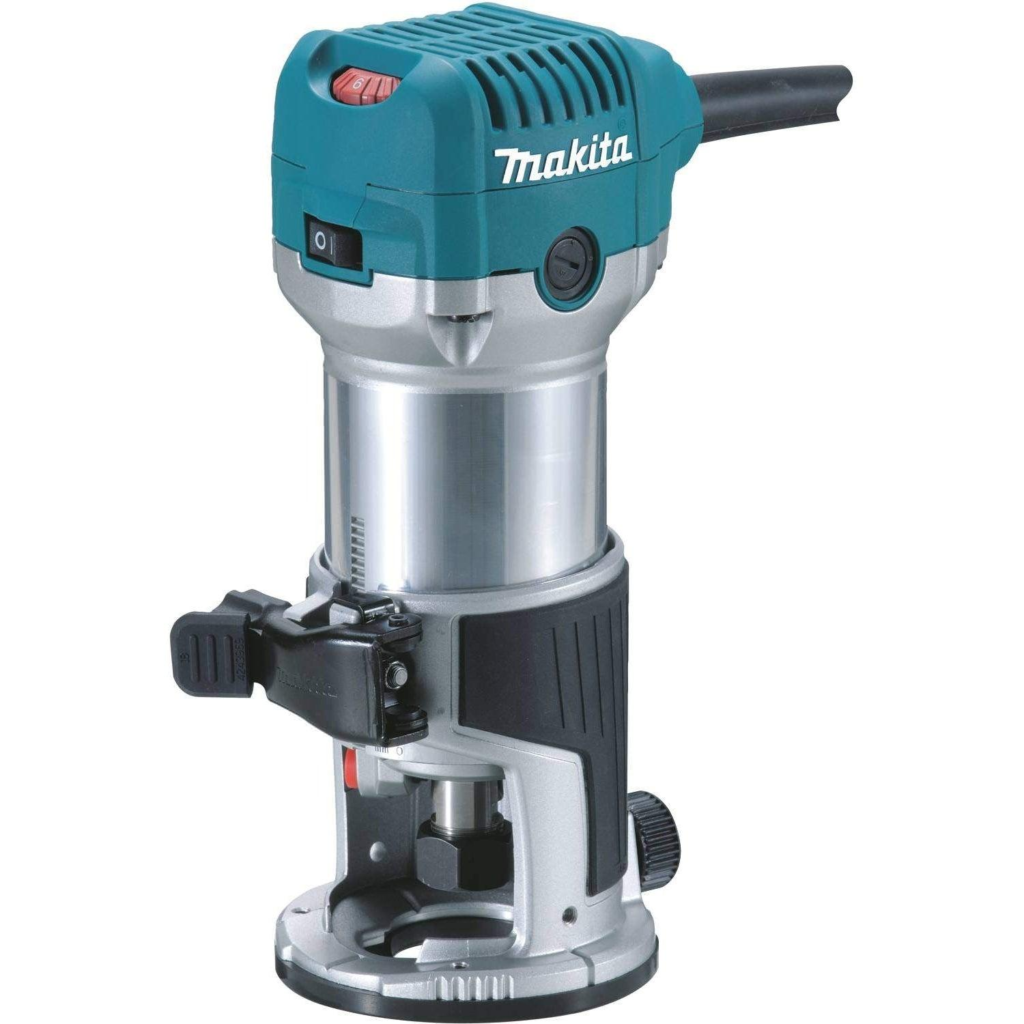
BEST OVERALL CORDED
Makita RT0701C
The best-balanced choice for general woodworking, combining dependable corded operation, fine depth control, and useful optional bases.
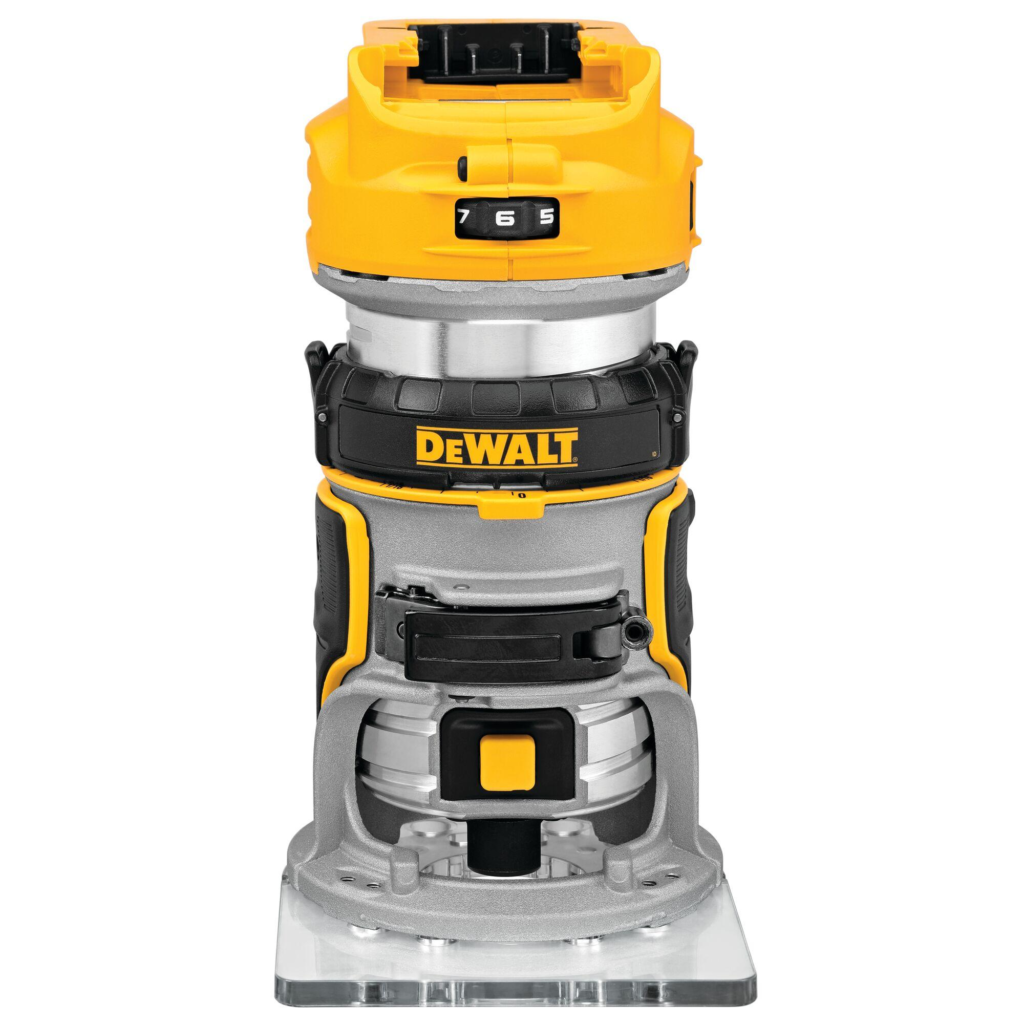
BEST CORDLESS
DeWalt DCW600B
An excellent option for users who value mobility, visibility, and the convenience of cordless power.
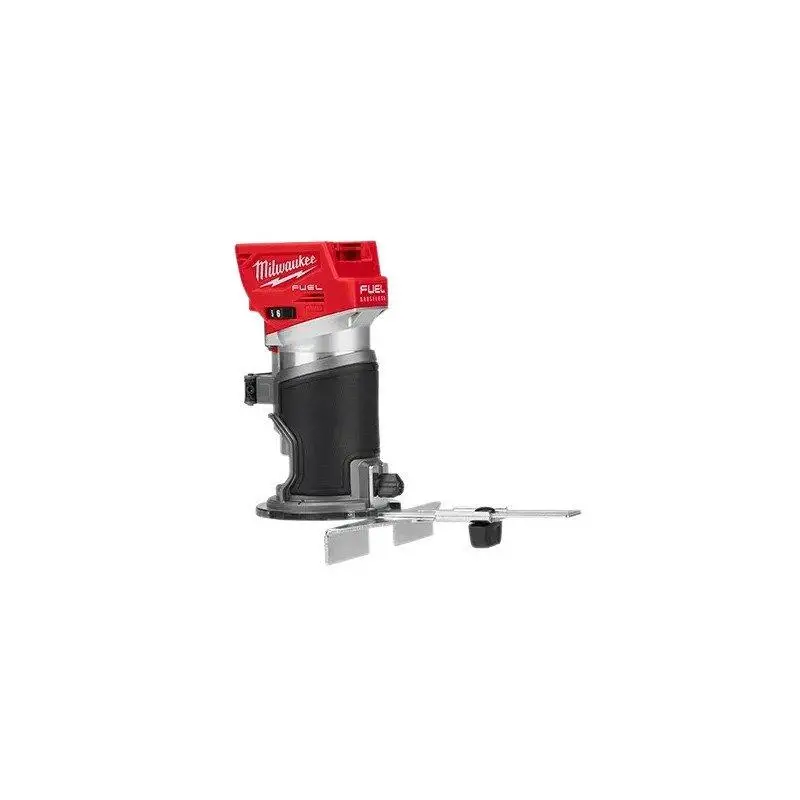
BEST FOR PROFESSIONALS
Milwaukee M18 FUEL 2723-20
A capable cordless solution for busy workshops and job sites, particularly for users of the M18 system.
- The right palm router depends on the kind of work you do, how often you use the tool, and whether you need cordless convenience.
For most DIY woodworkers, a reliable corded model with variable speed and precise depth adjustment is an excellent long-term investment. Professionals and frequent job-site users may find that a premium cordless palm router is worth the additional cost.
- Important regional buying note: The corded models and specifications above refer primarily to US-market versions, typically operating at 120V. If you’re purchasing in Europe or another 220–240V market, choose a version manufactured for your local voltage and check regional model numbers, collets, and accessories.